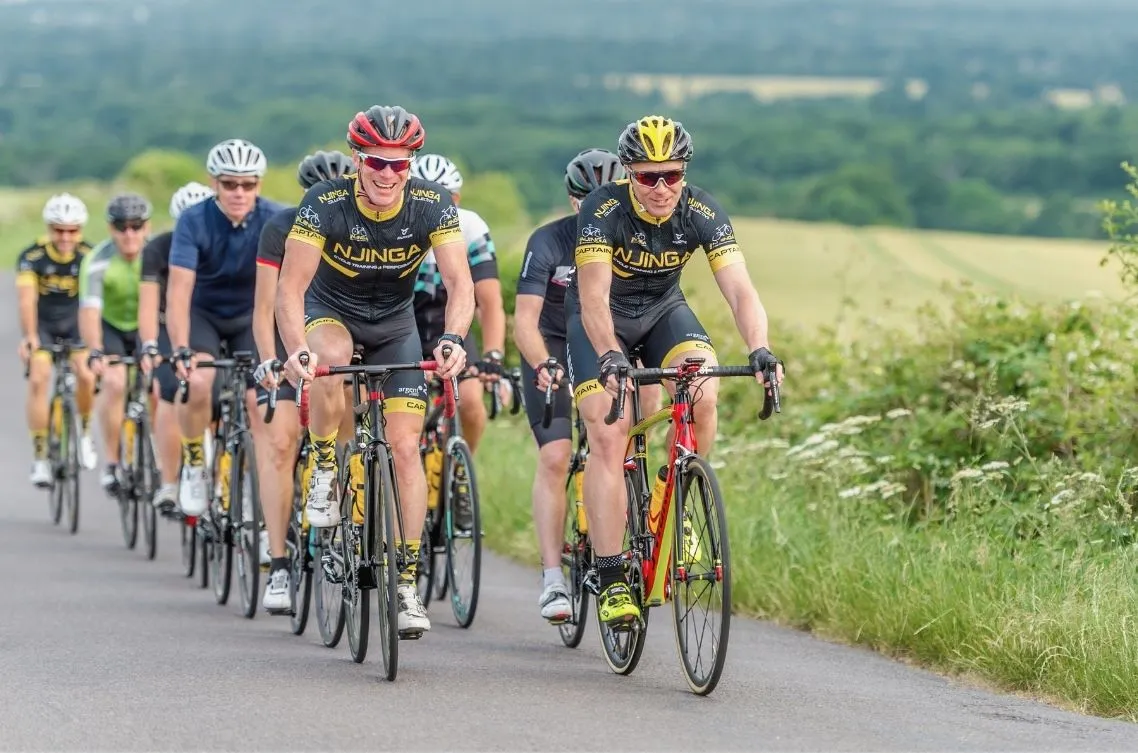
Why Your Weekly Club Ride Isn't Making You Faster
The club ride is one of the best parts of cycling but it's probably not doing what you think it is for your fitness. Here's how to reframe it and build your week around it properly.
The community, the routine, the favourite coffee stop. Rolling out on a weekend ride with people you've cycled with for years, on roads you could ride backwards. That's a big part of why most people got into cycling in the first place and it really matters. So this isn't about knocking the club ride. I'm a big believer it should stay.
What follows are my thoughts on reframing what the club ride actually is and what that means for how the rest of your training week should be designed around it to still see improvements week over week.
What Actually Happens on a Club Ride
Think about how most rides play out. You roll out steady, chatting, easing into it. Then the pace starts to lift as people warm up. A few climbs where things get a bit more serious and your effort goes up, before everyone regroups at the top. A bit of tempo, a café stop, and finally home. If you looked at that on a power file, most of the ride sits in that middle ground. Not easy enough to be a proper zone 2 endurance ride. Not long enough to really push your threshold. Just that in between effort and more often than not, junk or low quality miles.
There are harder moments, of course, but they're short. Overall it feels like a productive ride but your body never quite gets a clear signal to adapt to anything specific. Sports scientists sometimes call this the moderate intensity trap or the grey zone.
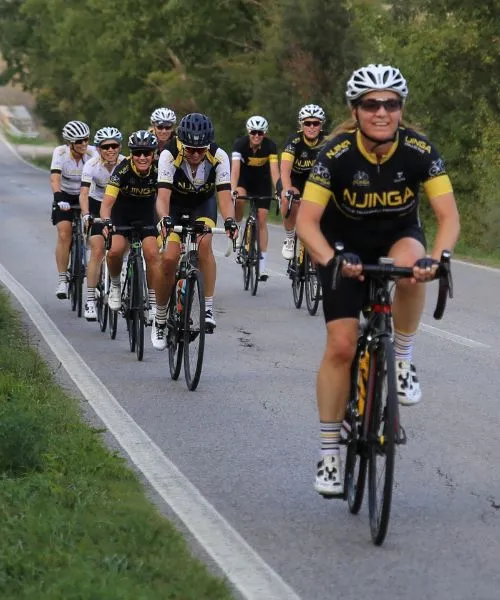
Why Group Ride Intensity Works Against You
It's just the nature of cycling in a group. The pace isn't set by your training needs. It's set by the group and more specifically, by the egos, habits, and competitive instincts of everyone in it.
You'll recognise these. The cyclist who sits on the front and accelerates hard out of every junction, roundabout, or traffic light, then eases back a few minutes later. The cyclist who unsettles the pace and cadence, half wheeling at the front, or the guy who gets passed by another cyclist, a woman, or someone carrying a bit more weight than him and can't let it go.
Everyone hates dropping off the back and so everyone pushes harder than they probably should to stay with the front of the peloton. Then recovers when things ease. Then does it again.
The result is a ride that's constantly surging and recovering. Hard accelerations followed by soft-pedalling. Zone 4 efforts followed by zone 1 recovery, then tempo (zone 3), then a brief spike into zone 5 on the climb. Cyclists at the back spending half the time braking because the peloton concertinas, then accelerating hard to close the gap when it opens again.
So your ride ends up being unstructured and constantly reactive.
What the Data Actually Shows
This is the part that surprises most cyclists I work with. Many come to me saying they do a zone 2 endurance ride with their club at the weekend. They judge it by their average speed as it feels steady enough. When I look at their power file the picture is completely different.
Average power often looks lower than you’d expect, partly because riding in a group reduces the effort needed to hold the wheel. But normalised power, which estimates the true physiological cost of the ride by accounting for all the surges, accelerations and variable intensity, is considerably higher. The gap between those two numbers tells you everything about what that ride is actually costing you.
What's actually happening: long periods of under-stimulating zone 2, interspersed with short hard accelerations that spike into zone 4, or sometimes higher. Not long enough in the harder zones to produce real adaptation at those intensities. Not consistent enough in the easier zones to build a quality aerobic base and more mitochondria.
The ride produces some fitness improvements, but it’s inefficient and poorly targeted and the recovery cost is often longer than twenty-four hours. This means it's eating into the quality of everything else in the rest of your training week.
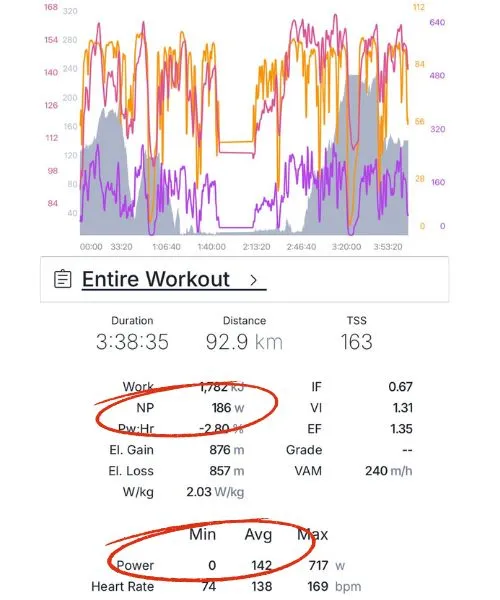
There’s a really useful metric I track with my 1-1 clients that shows how efficiently they’re producing power, especially during steady aerobic work. It's called efficiency factor and is simply your average power divided by your average heart rate on a steady effort. A low number means the engine is working harder than it should to produce the output. And the club ride, with its constant surging and drafting, never trains the specific quality that improves it. Most cyclists think their biggest weakness is climbing as they can feel it: their heart rate spikes, their legs get heavy and the gap opens, making it impossible to ignore. But efficiency is much harder to notice because it's invisible while you're cycling. Most cyclists have no idea whether they're efficient or not, and many have never even heard of efficiency factor.
Why This Is Harder as You Get Older
In your 20s or early 30s you can get away with a lot of this. You recover quicker. You absorb more random effort so progress still comes. However, as you get older the cost of that kind of cycling goes up and the return drops. You're using a lot of energy, creating fatigue that hangs around longer, but not getting much adaptation back from it.
Back-to-back club rides make this worse. Hammer it on Saturday, hammer it again on Sunday, and by Tuesday the legs are jaded, sleep is disrupted, mood drops, and whatever structured sessions were planned for the week get compromised before they've started. The muscles are being pushed without the recovery needed to rebuild from the effort.
Over time performance stagnates. Then it starts to drop. The cyclist pushes harder to compensate, which deepens the fatigue, which suppresses adaptation further. It's a loop that's hard to see from inside it and it's one of the most common causes of the plateau that experienced cyclists hit and can't explain.
What to Do With That
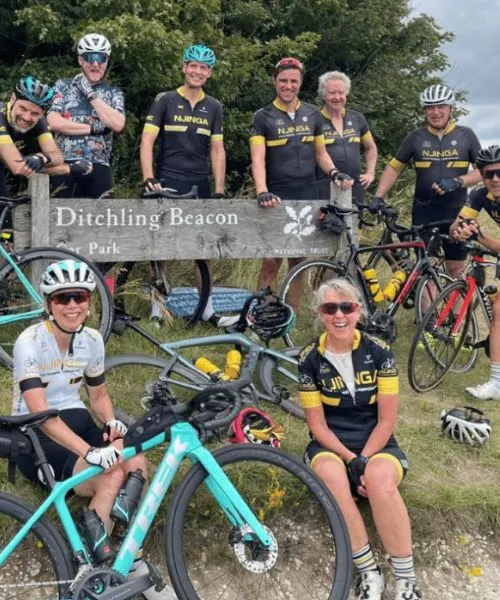
The club ride is worth keeping, you'd lose something important if you stopped it completely. A better approach is to be clear on its role. Let the club ride be what it is, a social ride with some fitness benefit on the side. Then build your actual training around it.
Put your more focused sessions earlier in the week. Times when you're fresher and can actually hit the effort properly. Keep those sessions structured and purposeful. Do your structured sessions Tuesday and Thursday and then come into the weekend without needing the ride to do a specific job.
Some weeks it's worth skipping it altogether. Taking a proper easy day, or riding steady on your own where you can actually hold a genuine zone 2 pace, steady power, steady heart rate, no surges.
If your club has different groups, dropping into a slightly easier one now and then can have a bigger impact than riders realise, especially if you agree to sit on front of the peloton and pull the others around, either holding a steady zone 2 pace on the whole ride or zone 2 on the flats and a controlled low zone 4 (sweetspot) effort on the climbs. This is something I recommend to a number of my riders who ride with clubs.
Or even just saying to a couple of cycling mates "I'm keeping this one steady today". It often lands better than you think as most people are feeling the same thing, they've just never said it out loud.
The club ride is still one of the best parts of cycling. Beyond the fitness, it does something no structured training session can replicate, it gets you out of your head, away from the desk, the inbox, and the demands of everyone who needs something from you. The fresh air, the coffee at the halfway point and that feeling of being genuinely alive in your body rather than stuck in your thoughts. That's definitely worth keeping. It just works better when you stop expecting it to also be your training.
If you're finding it hard to know where the club ride fits in your week and what training should sit alongside it to get the biggest gains, that's usually where a conversation with a coach is most useful. You don't need to overhaul everything, just get your structure clearer. That's what Elevate is for. We take the cycling you’re already doing, including your club rides, and shape the week around it so your training starts to build instead of just repeat.
Find out more about Elevate.
If you have other topics you want to address with your training, fueling and mindset then email us info@njingacycling.com and we’ll try to answer it for you.
Featured in Cycling Weekly, Rouleur & Cycling Plus