The 8 Hardest One-Day Amateur Cycling Climbing Events in the World
Check out these eight savage one-day climbing events we discovered around the world. Could one of them make your bucket list?
Many of our clients start working with us as they are targeting epic sportives like Mallorca 312, L'Étape du Tour, or iconic mountain passes like Stelvio Pass. There is no denying these are serious challenges.
But we wanted to see what sits beyond these major events, what are some of the lesser-known one-day cycling challenges out there where climbing defines the entire experience. We found a few and they are not for the faint hearted. The 8 we picked below are races and sportives built around major elevation gain, sustained gradients, high altitude and cumulative fatigue.
If you're looking for something a little more challenging or just interested in what truly demanding climbing looks like, we found these eight, some of the hardest one-day amateur cycling climbing events in the world.
1. Tour du Mont Blanc
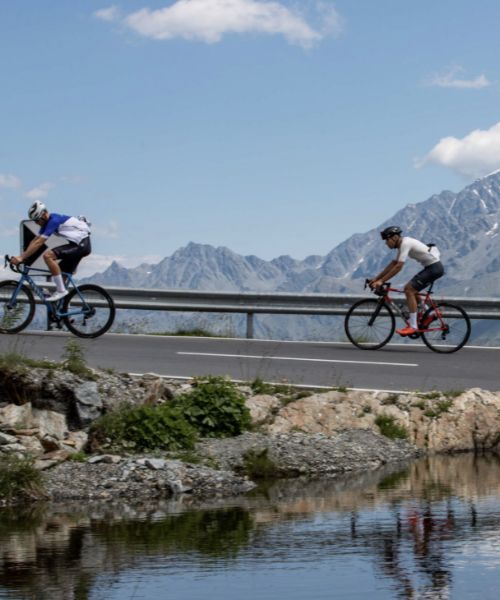
France / Italy / Switzerland
Distance: ~330 km
Elevation Gain: ~8,000 m
Major Climbs: Col du Grand Saint Bernard, Cormet de Roselend, Col des Saisies
Typical Gradients: Long sections at 7–9%
Highest Altitude: ~2,500 m
Often described as the toughest one-day amateur road race in the world.
Riders circumnavigate the Mont Blanc massif across three countries in a single effort. The vertical gain approaches the height of Mount Everest.
The gradients are rarely extreme in percentage terms, but the climbs are long, often 15–25 km at sustained 7–9%. Over 330 km, that sustained load creates deep muscular fatigue.
This event demands exceptional fueling precision, sustainable threshold power, climbing stamina and mental control across 12–15 hours. There is no easy section. It is continuous Alpine stress.
2. Tour des Stations
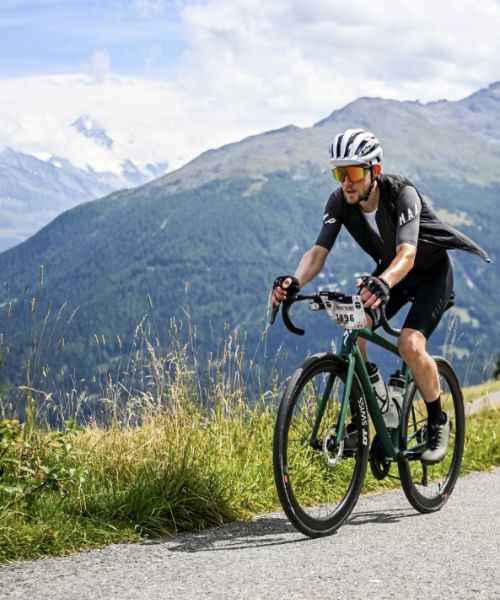
Switzerland
Distance: 242 km
Elevation Gain: ~8,800 m
Longest Climb: Col du Lein (~22 km ascent)
Sustained Gradients: 8–10%
Highest Altitude: ~2,800 m
Possibly the highest climbing density of any gran fondo globally.
Nearly 9,000 metres of elevation gain in a single day. Climbs extend beyond 20 km in length and frequently hold 8–10% gradients for extended periods.
Fatigue accumulates quickly, and recovery terrain is limited. Success depends on repeatable threshold output, efficient cadence control, structured pacing and a durable fueling strategy.
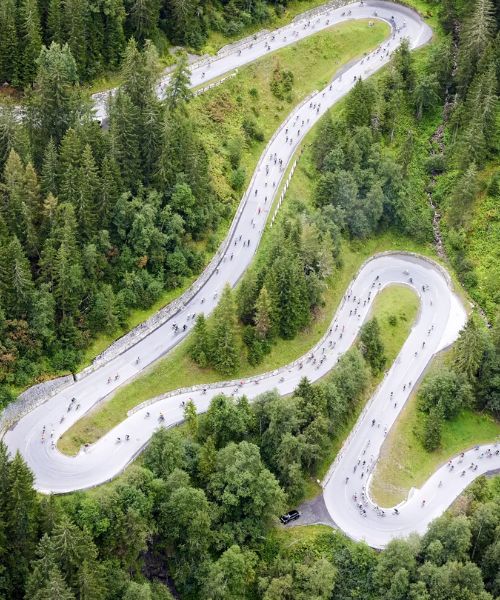
3. Ötztaler Radmarathon
Austria
Distance: 238 km
Elevation Gain: ~5,500 m
Major Climbs: Kühtai, Brenner Pass, Jaufenpass, Timmelsjoch
Kühtai Sections: Above 10%
Highest Altitude: 2,509 m
The stacking of back to back climbs makes this event an exceptional challenge.
After 200 km and several major passes, riders face the long ascent to Timmelsjoch. Kühtai earlier in the day includes sustained ramps above 10%, which sets the tone early.
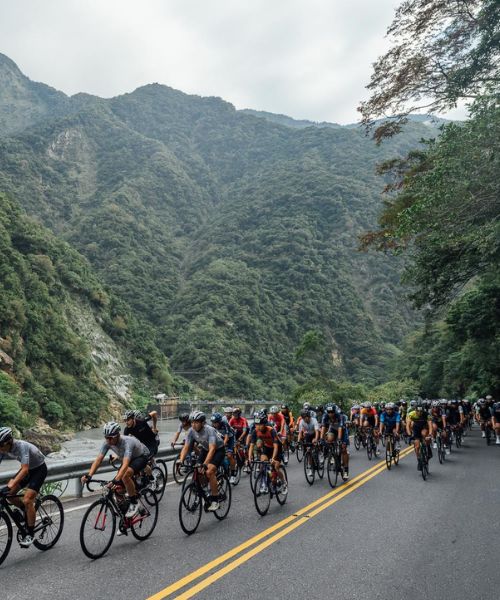
4. Taiwan KOM Challenge
Taiwan
Distance: 105 km
Elevation Gain: ~3,500 m
Final 30 km: ~8% average
Finish Altitude: 3,275 m
This event climbs from sea level to high altitude in one sustained effort.
The final 30 km averages close to 8% while oxygen availability steadily decreases. Heat early in the ride and altitude late create a distinct physiological challenge.
Pacing discipline is critical.
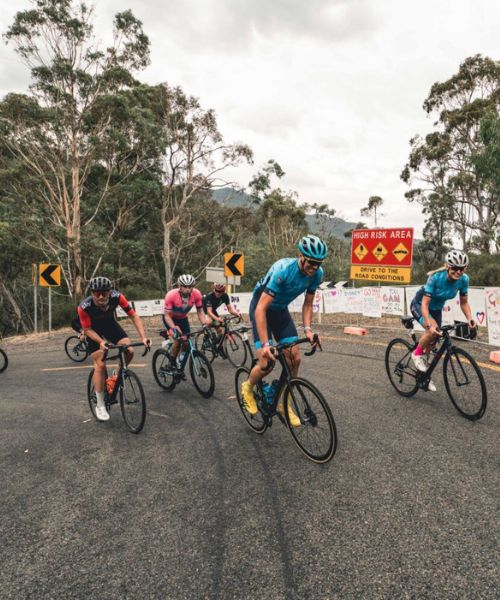
5. Peaks Challenge Falls Creek
Australia
Distance: ~235 km
Elevation Gain: ~4,000–4,400 m
Mount Hotham: ~30 km climb, sustained 7–9% sections
Final Climb: Falls Creek ascent
Three major Alpine climbs in one day: Tawonga Gap, Mount Hotham and Falls Creek.
Mount Hotham alone rises for nearly 30 km with sustained 7–9% gradients. Riders must then manage the final ascent to Falls Creek after 200 km already completed.
Heat and strict cut-offs increase the pressure.
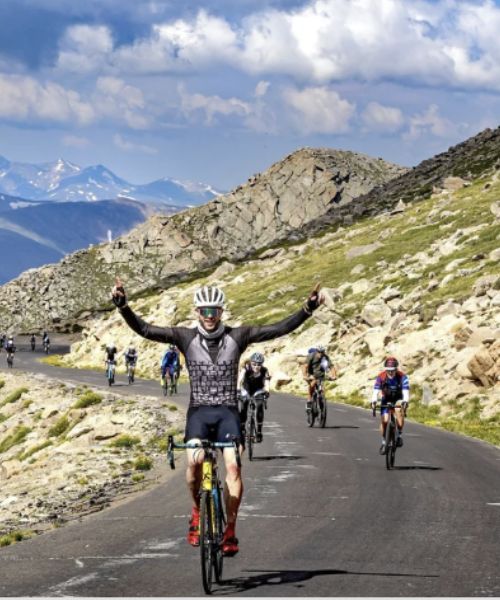
6. Mount Evans Hill Climb
USA
Distance: 45 km
Elevation Gain: ~2,100 m
Average Gradient: 5–7%
Finish Altitude: 4,300 m
This is the highest paved road race in North America.
While gradients are steady rather than extreme, altitude steadily reduces oxygen availability. Power output becomes constrained in the final kilometres which are above 4,000 metres.
7. Cycle to the Sun
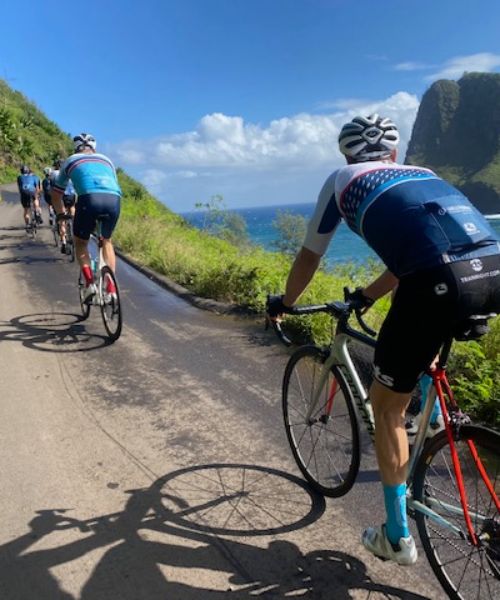
Hawaii, USA
Distance: 58 km
Elevation Gain: ~3,000 m
Upper Gradients: 7–9%
Finish Altitude: 3,055 m
A continuous ascent to the summit of Haleakalā. There is no meaningful recovery terrain. Sustained muscular endurance defines the ride.
8. Fred Whitton Challenge
United Kingdom
Distance: 180 km
Elevation Gain: ~3,900 m
Hardknott Pass: Sections up to 30%
Wrynose Pass: Above 25%
This event stands out for gradient severity. Hardknott Pass alone features extreme pitches approaching 30%. Overal strength and composure under very steep gradients determine how riders manage these sections.
What separates riders who DNF these events from those who smash them?
Its not purely fitness. Its, preparation, specifically for sustained climbing load, not short sharp efforts. That gap is the difference between arriving at the top feeling in control and just making it there.
Most of our riders aren't targeting Mont Blanc or Timmelsjoch. They're tackling a local sportive, planning a Mallorca trip, or simply tired of getting dropped when the road goes up. Every climb feels hard until it doesn't, and the preparation is the same whatever the scale.
Accelerate is where we work on that.
Structured, coached group training, and built around one goal - arriving at the top of something hard feeling in control and confident.
Explore Accelerate our online group training programme, our final block is specifically focused on improving your climbing, so you can smash your event, regardless if it's in this list, or not.
Because when the road tilts upward, preparation is key.
Featured in Cycling Weekly, Rouleur & Cycling Plus