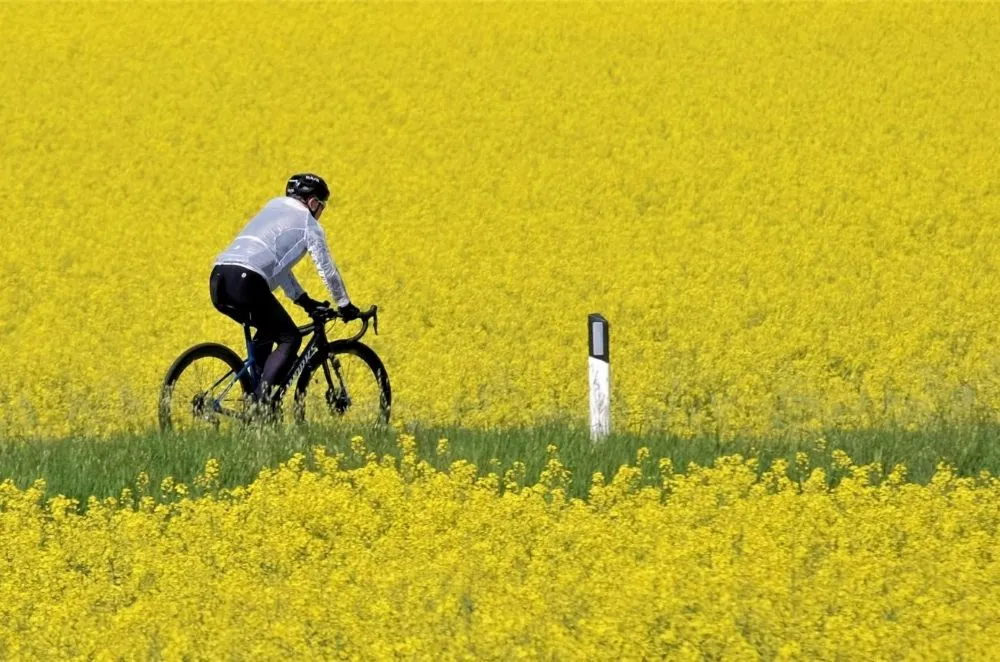
The Spring Trap: Why Jumping Into Intensity Too Fast Is Not Recommended.
If your sessions are feeling harder than they should and the gains aren't coming, the cause is almost always the same thing.
April arrives and everything changes. The days get longer and the roads, (hopefully) drier. Other riders appear from nowhere, looking sharp and fast and your calendar starts to fill up with sportives, club events, and that big challenge you've been planning for a while.
Spring is that time when you also get to see the impact of every decision you made in winter. For riders who built patiently, the next three months feel progressive, energising, purposeful. For riders who skipped the foundation, rushed the base, or ground themselves down through February trying to keep pace with everyone else, spring has a different feeling. Hard sessions don't produce the gains they were hoping and fatigue that won't quite lift.
The most common spring cycling training mistake I often see is also the most predictable one.
Coming out of winter, riders panic and jump into high-intensity work before their aerobic base is solid enough to support it. The impulse is understandable, the weather is better, motivation is high and their events are on the horizon. However, physiologically, layering intensity onto an underdeveloped foundation produces diminishing returns and can actually increase the chances of injury and burnout.
(Naturally all of this depends on when your key event is. If you have something in the next six to eight weeks you should already be well into your build phase - this is aimed at riders whose summer events are still a few months away.)
Why Cycling Base Building in Spring Matters More Than You Think
.webp)
A well-developed aerobic base means the body has a dense network of mitochondria in your working muscle, the cellular machinery that converts oxygen and fuel into usable energy. Your cardiac output improves and fat oxidation capacity rises, so longer efforts can draw more efficiently on available energy stores. Your connective tissues, tendons, and ligaments have been progressively loaded over the winter and have adapted to the demands being placed on them.
If you built this foundation properly, with consistent genuinely aerobic riding over eight to twelve weeks, you've created the perfect conditions in which quality training actually produces quality adaptation. Interval sessions produce power gains and hard group rides will increase your fitness. Your recovery between sessions will also be faster and more complete.
If you skipped or compressed that base training and now jump to intensity too early, the system is being asked to produce outputs it doesn't yet have the infrastructure to support. The intervals will feel impossibly hard and your recovery much slower. The fitness you're chasing stays just out of reach and every gain feels so much harder to achieve.
The Transition Most Riders Get Wrong
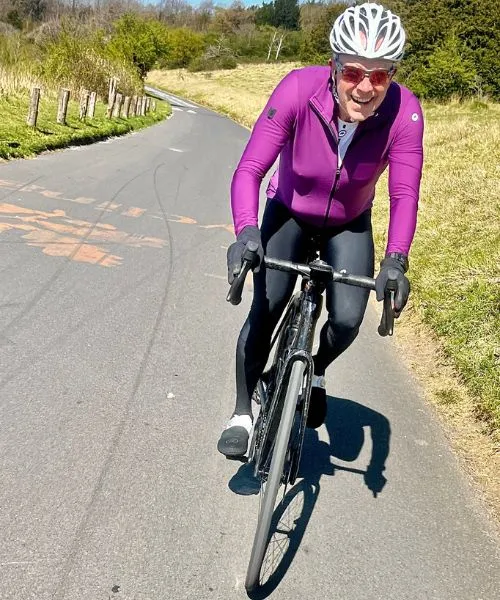
The move from winter base training to spring quality work should be a transition, not a switch. Most riders flip it overnight. The body doesn't adapt well to that kind of abrupt shift.
A more effective spring cycling training plan builds intensity in gradually over three to four weeks, adding one short block of tempo or sweet spot work into an otherwise mostly aerobic week. As the weeks progress you slowly start to extend that block, monitoring recovery throughout, then introducing threshold or VO2max work once the lower intensity work is feeling controlled and well-managed.
The benchmark worth paying attention to isn't how hard a session feels in the moment. The question to ask at the end of each week is how well are you recovering between sessions, and is your easy riding still feeling easy? When supposedly easy days start feeling hard, the intensity load is too high relative to your current base. Pushing through on willpower produces neither the fitness nor the form you're trying to build.
Research on masters endurance athletes consistently shows this pattern. Older athletes benefit significantly from longer base phases and more gradual intensification. The hormonal and recovery differences that shape intensity training for 40+ riders mean the reward from patience is genuinely larger at this stage, not smaller. The riders who peak in July started spring more conservatively than they felt they needed to.

One client who followed this approach under my coaching guidance was David who shifted away from his “all-out” mindset towards a smarter, more progressive and holistic training approach. On-bike sessions focused on more high quality structured Zone 2 sessions, building his aerobic base and endurance efficiency. This was complimented with structured interval sessions in zone 4 and some efforts in zone 5 to build his functional threshold power (FTP). Finally we added high quality focused strength work in zone 4 and zone 5 to enhance his climbing power and stamina. He described it clearly:
“Once I started training smarter, I realised I had more potential than I’d given myself credit for.” Read his full story here.
What This Looks Like in Practice
Before adding any intensity work, assess your base honestly.
Can you hold a genuinely comfortable conversational pace for two and a half to three hours without your heart rate creeping up or significant fatigue the following day?
If not, your base needs more time before quality work will deliver real benefit. A few more weeks of volume now is worth considerably more than intervals started too early.
When quality work does begin, start by re-doing your FTP test to get accurate training zones for power and heart rate then start with tempo (zone 3) rather than maximal efforts. Extended tempo sessions, twenty to forty minutes at around 80 to 85 % of your threshold, build intensity tolerance without generating the recovery debt that harder sessions create. These should feel challenging and controlled, not exhausting. Then move to sweetspot efforts 90-93% of your FTP, gradually building up the duration from 8 minute intervals ending on 20 minute intervals.
As intensity increases to threshold and VO2 Max efforts over the weeks, the temptation to ride easy days slightly harder increases. Resisting this urge to race others or chase riders down who pass you on the road matters more than most cyclists expect. Easy active recovery days are what allow higher intensity training days to work and build the adaptation needed to stimulate growth. When your easy day heart rate drifts consistently above Zone 2, the whole structure begins to break down because recovery never completes fully and you end up training not feeling fully refreshed.

After every third or fourth training week, a recovery week is good practice (subject to training intensity) where volume drops by thirty to forty percent and intensity is minimal (zone 1 to mid zone 2 max). This is smart training. It is when adaptation consolidates and the fitness built in the preceding weeks becomes accessible performance.
Set outcome goals, a target time, a specific climb, a power to weigh target, as these give your season direction. The problem is they're hard to act on day to day. You can't control your FTP on a random Tuesday morning, but you can control whether the session gets done properly and whether the recovery that follows it is taken seriously.
That's where a process goal earns its place. Something like: complete three structured 45-60 sessions this week with genuine recovery days between each and a steady endurance ride on the weekend to build. It's actionable, repeatable, and directly builds the conditions the outcome goal depends on. Follow this process through spring and your outcome is likely to be achieved. Chase the outcome without the process and your chances of success are lower.
The Belief to Carry Forward
Spring rewards the cyclists who arrive with a solid base and build intensity with patience and structure. The season is long enough, so don't rush it.
That requires a plan that knows where you're starting from, what you're building toward, and how to manage the weeks between here and your key events in a way that respects your recovery capacity and your life outside cycling. That's the key principle behind both Elevate and Accelerate.
If you're heading into spring and want a clear progressive plan that gets you to your events in the form you've been working toward all winter, a free discovery conversation is the simplest next step.
Book your Elevate discovery call → Or Explore Accelerate our 7 month long group programme to help you build the entire process from base to strength.
Featured in Cycling Weekly, Rouleur & Cycling Plus