Cycling Nutrition Over 40: Why Protein Matters More Than You Think
After 40, your muscles repair slower and recovery takes longer but most cyclists still skip protein at breakfast and post-ride when it matters most. This winter, a few simple plate tweaks (not a strict diet) can protect your strength, speed up recovery, and help you feel lighter on the bike instead of sluggish.
If you're a masters cyclist hitting middle age (or beyond), winter can feel tough: Dark, cold, busy days that drain your motivation, more comfort food, missed sessions, and the nagging worry you're losing your fitness.
On top of that, there’s a common belief that eating more protein is for bodybuilders, not “normal” cyclists. So you focus on carbs for the bike, maybe slash “bad” foods when you worry about weight, and hope it balances out.
The problem? Once you’re 40+, that approach works against you.
Your muscles repair more slowly. Hormones shift and recovery takes longer. And if your protein intake is low or uneven, winter becomes the season where you lose muscle, gain tiredness, and feel heavy on the bike, even if you’re trying hard.
Thankfully the fix isn’t complicated, it’s treating protein and a few simple plate tweaks as performance and recovery tools so your winter rides feel stronger, not sluggish.
Why protein matters more after 40 (especially in winter)
Your body in your 40s, 50s and 60’s is working under a different set of rules. A few important realities:
- You naturally lose muscle a little faster with age (unless you actively protect it).
- Recovery from hard sessions and life stress takes longer.
- Long workdays, poor sleep, and winter colds all chip away at your resilience.
Protein helps you fight back on all three fronts:
1. Muscle maintenance and strength
Protein provides the building blocks (amino acids) your body needs to repair and maintain muscle. For a 40+ cyclist, you dont want to bulk up, you want to focus on maintaining the engine you already have.
Fuelling is one of the three pillars of our Njinga 360 Performance Code and one of the most consistently underestimated by the cyclists we work with.
2. Recovery from both training and life load
Winter is often when life stress is highest: year end deadlines, family commitments, less daylight. Your body doesn’t separate “training stress” from “life stress”. It just knows total load. Adequate protein, alongside carbs and sleep, supports your recovery from all of it.
3. Feeling properly fed, not constantly snacky
Protein is more satisfying than many carb only snacks. A slightly higher protein intake can help you feel more stable and graze less, which makes it easier to stay out of the all or nothing cycle of strictness followed by late night raiding of the cupboards.
Winter is therefore the perfect time to nudge protein up a little and tidy your plate, not to chase a diet, but to support your body as much as possible.
How much protein do you actually need as a 40+ cyclist?
You might have seen extreme numbers thrown around on social media – 200g a day, huge protein shakes, or bodybuilder style eating. That’s not what we’re aiming for here. Recent sports nutrition research suggests that endurance athletes, including older riders, typically do well around 1.2–2.0 grams of protein per kilogram of body weight per day, depending on how hard and how often they train.
Daily Protein Required Based On Weight And Training Intensity
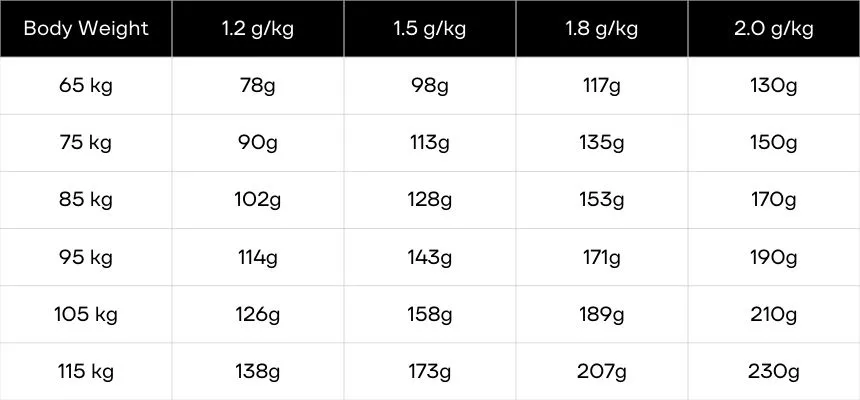
For many 40+ cyclists, that’s slightly more than they’re currently eating, especially at breakfast and after rides – but it’s not extreme or unmanageable.
The goal is to:
- Spread protein evenly across the day (not just a big dinner).
- Make sure key moments like breakfast and post ride are covered.
- Do it in a way that still feels like normal food, not a permanent diet.
A simple rule of thumb: aim for 20–35 g of protein at each main meal, plus a couple of smaller protein containing snacks across the day.

Easy winter tweaks that work in real life
Let’s translate this into actual food for a busy cyclist who juggles work, family, and winter weather.
1. Upgrade breakfast
Many 40+ riders start the day with low protein habits: toast and jam, a small bowl of cereal, or just coffee. By 11am they’re starving, grazing, and already on the back foot. Instead, think protein + carbs + something colourful. Protein supports muscle repair and keeps you fuller for longer. Carbs provide usable energy. And the colour?
Bright fruits and vegetables are rich in antioxidants and phytonutrients. Those deep blues and purples (anthocyanins), vibrant reds and oranges (carotenoids), and rich greens all help reduce inflammation, protect cells from damage, and support overall metabolic health.
Examples:
- Greek yogurt bowl: 200g Greek yogurt (20g) + 30g granola with nuts (5g) + 1 tbsp peanut butter (4g) + berries = 29g
- Eggs on toast: 3 eggs scrambled (18g) + 2 slices whole grain bread (8g) + small glass milk (4g) + handful of spinach = 30g
- Protein porridge: 60g oats (8g) + 250ml milk (9g) + protein powder (18g) + banana = 35g
You don't need to ban toast or cereal. You’re adding enough protein that breakfast becomes a proper foundation.
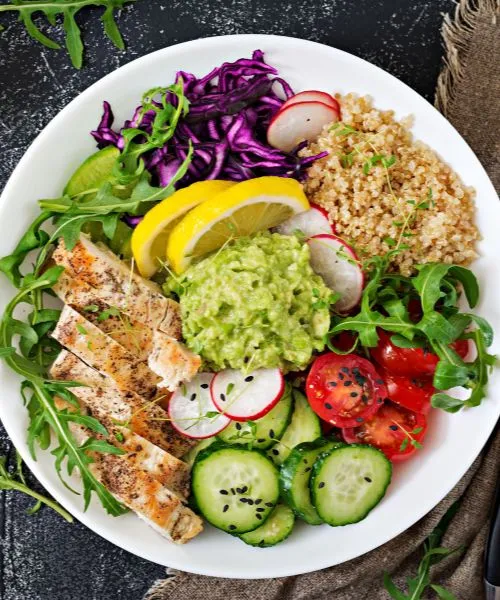
2. Make lunch pull its weight
Lunch is often a rushed sandwich, eaten at a desk. The fix isn’t a perfect salad – it’s slightly more deliberate choices. Look for:
- A protein anchor – chicken, fish, tofu, eggs, lentil soup, bean chilli, cottage cheese, etc.
- High fibre carbs – brown rice, quinoa, potatoes with skin, hearty soups with beans and wholegrain seeded breads
- A bit of colour – salad, veggies, or a piece of fruit.
Examples:
- Bean chili: 150g kidney beans (12g) + 100g ground turkey (20g) = 32g
- Tuna sandwich: 1 tin tuna (25g) + 1 slices bread (4g) + small yogurt side (5g) = 34g
3. Protein aware dinners
Evening meals are where most riders already eat the bulk of their protein. Here, the goal is not to overhaul everything – it’s to check that the plate reflects your goals. Ask:
- Is there a palm sized portion of protein (meat, fish, tofu, tempeh, beans, eggs, etc.)?
- Is half the plate veg or salad most nights?
- Are the carbs (pasta, rice, potatoes, bread) in a portion that feels good for your ride load, not automatic or guilt driven?
Examples
- Chicken & rice: 120g chicken breast (30g) + 200g cooked rice (6g) + vegetables = 36g
- Salmon pasta: 130g salmon fillet (28g) + 100g pasta (6g) + vegetables = 34g
You don’t need to cut out favourite meals. Small tweaks like adding extra beans to a stew, swapping some white pasta for wholegrain, or including a side of veg start to change how you feel on the bike.
4. Snacks (15-27g protein)
- Protein shake: protein powder in water/milk = 15-30g ( depending on brand)
- Cottage cheese: 150g cottage cheese (18g) + fruit = 18g
- Nuts & cheese: 30g almonds (6g) + 40g cheddar (10g) = 16g
- Protein bar: Most bars = 15-22g
- Apple and peanut butter: 180g apple (0.5g) + 2 tablespoons Peanut butter (8g) =8.5g
- Hard-boiled large eggs: 2 eggs + apple = 12g (lighter snack option)
These are rough amounts, you can adjust portion sizes to hit your specific targets from the table!
5. Post ride recovery that respects your 40+ body
After a winter ride or indoor session, it’s easy to:
- Skip food because you’re rushing.
- Only grab something sweet and “quick”.
- Wait until a big dinner to “catch up”.
Instead, aim for protein + carbs within 30 minutes of finishing, a simple shake made with protein powder, milk/yoghurt and fruit is the perfect go to post session. Follow this with a proper, full meal (with protein and carbs, see above) within 2 hours of training.
This helps reinforce the work you’ve just done, clearly signalling to your body that it’s time to repair and rebuild.
6. Mindshift
When you’re over 40, think of your plate as part of your training plan, not a separate project. You don’t need to go over board but a few simple tweaks can have a BIG enough impact. Think:
- “Winter is when I quietly protect my muscle and energy.”
- “Protein is a performance and recovery tool for my 40+ body.”
- “Small, sustainable tweaks to my plate are enough.”
- “Even when life is busy, I can make 1–2 good choices per day that compound.”
That’s part of our training philosophy in action: life aware choices that respect your body and your reality, not a rigid plan you’ll abandon by March.
7. Action steps for this week
You don’t need to overhaul everything. Pick one or two of these to try over the next 7 days:
1. Upgrade breakfast once or twice.
Swap your usual low protein breakfast for one of the examples above. Notice how your mid morning energy and cravings feel.
2. Add 10–15 g of protein to lunch.
That might mean adding extra beans to soup, choosing a sandwich with more filling, or throwing in a boiled egg or yoghurt on the side.
3. Prepare your post ride window.
After your next ride or turbo, plan ahead: have a recovery option waiting (yoghurt and fruit, leftovers, beans on toast) so you’re not at the mercy of whatever’s in the cupboard.
4. Do a gentle protein “audit” for one day.
Try a free app to track your exact protein intact over one day like My Fitness Pal. I know I was surprised at how short I was falling from optimal protein levels. Are breakfast and post ride your weakest links? That’s where small changes matter most.
5. Pair protein with pleasure.
Don't think of this as punishment. Find options you genuinely enjoy, a favourite yoghurt, a warming bean stew, eggs on sourdough or a delicious protein shake with berries.
Bringing it together – and your next step with Njinga
If you’re a cyclist over 40, winter can either quietly erode your strength and confidence, or it can be when you protect your muscle, support your recovery and build calmer, more sustainable eating habits. You don’t need a strict diet just a plate that matches your age, goals, and reality.
That’s exactly how we approach Fuelling inside our Train • Fuel • Mind framework. We’re not here to police your food. We’re here to help you:
- Understand what your 40+ body actually needs.
- Turn that into realistic meals and snacks that fit work, family, and winter.
- Align fuelling with your training plan so you feel the difference on the bike.
Struggling To Get Your Nutrition Right Around Training?
It's one of the most common issues we see in cyclists over 40. We cover it directly inside our coaching programmes, alongside training structure and recovery.
Find out how Njinga coaches riders over 40 →
If you want personalised guidance that takes your health, cycling goals and full life load into account, an Elevate coaching relationship is ideal. You’ll get a training and fuelling plan that works with your schedule, not against it.
If you prefer structured support in a group, Accelerate gives you coaching, accountability, and a community of riders who are also balancing careers, families, and changing bodies.
Whether you work with Njinga now or later, remember this:
You don’t have to eat perfectly to ride stronger, you just have to feed the cyclist you are now, not the one you used to be. Start with one upgraded breakfast, one smarter post ride snack, and see how your next few rides feel.
Featured in Cycling Weekly, Rouleur & Cycling Plus