"How Do I Know If I'm Overtraining or Just Tired?" - A Guide for Cyclists Over 40
Struggling with low energy, poor recovery, or declining performance? Is it overtraining and if so, what should you do about it?
In the last few weeks, 2 of my clients have really been struggling with low energy. This has had a big impact on their training and ultimately their day to day life. When this happens it raises an immediate red flag with me that we need to dig deeper to really understand what's going on.
"I've been tired for weeks. Should I rest more or push through?"
"Am I overtraining or am I just being soft?"
"My body feels wrecked but my plan says to train today, what do I do?"
These are the questions I've been getting, and given the crazy schedules most of us are juggling, I thought it deserved a bigger review as a few more of you may be experiencing the same challenge. (This question also matters even more after 40 as your recovery capacity becomes even more sensitive to sleep quality, life stress, and overall health.)
Telling the difference between normal training fatigue and genuine overtraining syndrome isn't always straightforward, even for experienced coaches working closely with their clients. However, there are some clear signs and markers that can help you identify which one you're dealing with.
The most important thing to know is that true overtraining syndrome is much rarer than most cyclists think. Functional overreaching, a temporary and recoverable build-up of training fatigue, is far more common. Even more common is simple tiredness caused by the demands of everyday life.
The challenge is that these three states can feel very similar, but they require very different responses. Let's break them down and look at how to tell the difference.

The Four Levels of Fatigue Every Cyclist Should Understand
1. Normal training fatigue: This is the expected heaviness and mild decrease in performance that follows an intense training session or block. Your legs feel tired, motivation is lower than usual for a day or two and your performance is slightly suppressed. This usually improves within 24 to 72 hours of appropriate rest and is a normal, desirable part of your training process.
2. Life load fatigue: This is the accumulated tiredness of a demanding life, insufficient sleep, high work stress, family demands and emotional load. This produces physical symptoms that are often indistinguishable from training fatigue: heavy legs, reduced motivation and reduced performance. However, the cause is not training volume so reducing your training load won't improve it. This is where you need to address your sleep, reduce your life stressors where possible and allow for genuine psychological rest. Many cyclists who believe they are overtraining are actually experiencing this, and it will only improve with changes to your lifestyle, not just by adjusting/reducing your training.
3. Functional overreaching: This is a state of accumulated training fatigue that goes beyond the normal recovery window. Its typically two to four weeks of insufficient recovery relative to your training load. Your performance is meaningfully suppressed beyond your normal fatigue levels. Sleep quality often deteriorates, your mood is affected, irritability, reduced motivation, a sense of dread around training sessions rather than normal pre-session reluctance. Your resting heart rate may be elevated and your heart rate variability, if you track it on your watch, typically drops noticeably.
Functional overreaching can usually be resolved with adequate rest and recovery, typically one to two weeks of significantly reduced training and does not produce lasting physiological damage. It is the state most cyclists mean when they say they're "overtraining," but your recovery path is straightforward if it's identified early.
4. Non-functional overreaching and overtraining syndrome. These are both on the serious end of the spectrum and not something I usually see amongst my amateur riders. Non-functional overreaching takes weeks to months to resolve. True overtraining syndrome results in a long-term decline in both physical and mental performance and can take months to over a year of structured recovery to see improvement. Both are associated with significantly elevated training loads over long periods without adequate recovery, and both are genuinely rare in amateur athletes who are not competing full-time.
True overtraining syndrome produces symptoms that go well beyond training fatigue: persistent hormonal disruption (measurable in blood tests), immune suppression, significant and prolonged mood disturbance, and performance decline that doesn't get better even after short periods of rest. This usually requires professional medical support alongside reduced training.
The Data You Need To Pay Attention To
For our usual 40+ year old cyclists we work with trying to navigate this, these are the most useful indicators we track:
Sleep quality. Normal fatigue doesn't typically disrupt your sleep quality. Functional overreaching often does. If you have difficulty falling asleep or staying asleep, or your sleep doesn't feel restorative despite 7-8 hours over a few nights, your training load is worth examining.
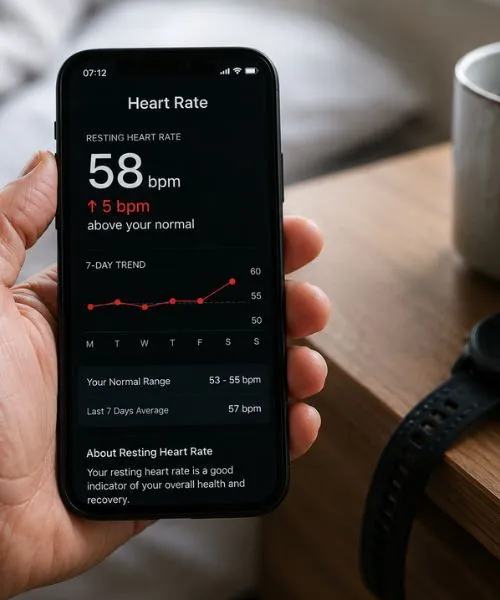
Resting heart rate. A resting heart rate consistently 5 or more beats above your personal norm is a reliable signal of accumulated fatigue or illness. Check yours first thing in the morning, before getting out of bed for three consecutive days. One elevated reading does not mean much. Three consecutive elevated readings means something needs reviewing.
Training sessions: These can often provide the clearest clue. When you're experiencing normal fatigue, hard sessions feel challenging but manageable. When you're moving into functional overreaching, sessions that would normally be well within your capabilities can suddenly feel far harder than they should. The effort you're putting in no longer matches the performance you're getting out.
Motivation pattern. Pre-session reluctance or fear is entirely normal in a challenging training block. Persistent dread, waking up dreading the session or relief when a reason arises not to train is a different signal and needs closer attention.
Duration of symptoms. Normal training fatigue resolves within 72 hours of rest. If you take two full rest days and still feel just as flat on the third morning, your state is beyond normal fatigue and a more substantial recovery period is required.
Quick Check: Are You Tired or Overreached?
If you answer "yes" to three or more:
- Sleep quality has worsened
- Resting heart rate is elevated
- Training feels harder than normal
- Motivation is unusually low
- You feel no better after two days off
Then a more structured recovery block may be appropriate for you.
What to Do To Help Reduce Fatigue
If you're not sure whether to train or rest, choose rest. Pushing on when you're already overreached can dig the hole deeper and prolong your recovery. Taking an extra day or two off when you are simply tired costs very little in fitness terms. When in doubt, recovery is usually the safer bet.
Take a five-day recovery block, not just two. Reduce training volume by 50 to 70 %, eliminate all intensity and prioritise your sleep. If you feel significantly better by day four, you were in functional overreaching and the rest block has addressed it. If you feel the same or worse, the picture is more complex and medical input may be required.
Separate training fatigue from life fatigue. Spend a day assessing what else is going on in your life, sleep debt, work stress, emotional load. If significant life stressors are present, training reduction alone may not be enough. Addressing the life load as directly as possible is part of the recovery.
Track the right things rather than everything. Resting heart rate and morning mood are the two most reliable low-tech markers of recovery status. You don't need a complex HRV protocol, you just need a consistent check-in that gives you accurate data about where you are.
Moving Forward With Confidence
Tired is normal and you can recover from accumulated fatigue. True overtraining syndrome is rare and requires professional support if you genuinely suspect you have it.
The skill for older cyclists is to develop the ability to distinguish between these states accurately and the confidence to respond appropriately rather than pushing through everything or resting at the first sign of difficulty.
Both of those capabilities develop faster with coaching.
If you need a clearer understanding of how your body responds to training, recovery, sleep, stress, and life demands, that's exactly what we focus on inside Elevate. If you'd like a personalised look at your training, recovery, and performance goals, book an Elevate Discovery Call and let's see what's possible.
Book an Elevate discovery call →
WRITTEN BY: Togo | Head Performance Coach
Focused on helping cyclists over 40 improve performance, health, and longevity, he works with athletes worldwide through personalised coaching, training plans, and group coaching programmes. Learn more about his coaching and book a free discovery call today.
Featured in Cycling Weekly, Rouleur & Cycling Plus