Last-Minute Cycling Event Preparation: What to Do, What to Avoid, and How to Arrive Ready
The final three days before a sportive or cycling event can make or break the day. Here's the last-minute preparation guide for cyclists over 40.
Three days out. Your training is finished and you know you've done the work, but somehow that doesn't make the waiting any easier.
Most cyclists who've put serious training effort into an event arrive at this point feeling one of two things: either confident that their preparation has gone well, or suddenly convinced it hasn't and they don’t have the endurance mileage in the legs. Often both, and sometimes even in the same hour.
The facts are the facts so don’t sweat the things you can’t change. You are where you are and what happens between now and the start line won't change your fitness but it will change how it plays out on the day. For cyclists over 40, the final three days matter more than most realise.
Here’s what they should look like.
1.Ride Less Than You Think You Should
Taper anxiety is real. I know I've felt it. The final few days before an event feel wrong. The legs feel flat, energy feels low, motivation to ride is either sky-high or non-existent. Most cyclists interpret this as a sign they haven't done enough and respond by adding sessions, riding harder than planned, or doing a "sharpener" session that is longer and more intense than it should be.
Do that and you will just arrive at the start line tired.
The flatness you're feeling is not undermining your training. It's the body consolidating the work done over the preceding weeks. Glycogen stores are replenishing. Muscle tissue is repairing. The hormonal environment is resetting. This process takes a few days and it feels like nothing is happening because all the adaptation is internal.
For the final three days: listen to your body and energy levels. If you feel drained and flat then avoid cycling and focus on optimising recovery. On the other hand if you feel re-charged and good then I’d recommend a short ride if you want to, but keep it genuinely low intensity (no more than a comfortable endurance pace / zone 2) so it’s enough to feel the legs without loading them.
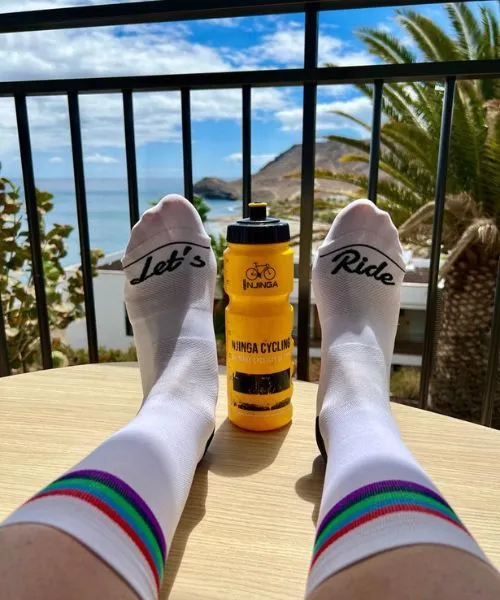
If you've travelled abroad for the event, two days out is the right time for a short ride. Forty to fifty kilometres, no more than 500 metres of climbing, at the same easy pace, this isn't training. Make sure the bike is built correctly after travel, the gears are shifting cleanly, the position feels right, and nothing has moved in transit.
The same applies if you're renting a bike for the event. Get on it before the day itself. Ride some flats, find a climb, do a descent. A rented bike that feels unfamiliar on event morning is a distraction you don't need, especially if it's a bike you haven't ridden before.
For Alpine Gran Fondos specifically: if you've arrived at the venue and the urge to ride the climbs in the days before is strong, channel it into a route recce rather than a proper effort. An easy ride over the first twenty to forty kilometres of the course, subject to how much climbing is involved, gives you valuable course knowledge without costing you anything on the day. As a general rule I'll get my riders to ride the first climb, or part of it depending on its length, at a genuinely easy pace. Just enough to know what's coming. Save the legs for when it actually matters.
The day before the big event day, try to avoid cycling and being on your feet too long. You also want to stay out of the sun if it’s a big summer challenge and its forecast to be hot and sunny. Conserving your energy is critical. Chill at the hotel or guest house.
2. Sleep: The Two Nights That Actually Matter
Most cyclists going into a significant event sleep poorly the night before. This is normal, almost universal, but not as damaging as it feels. One poor night's sleep before an event has a surprisingly modest effect on physical performance, the body has reserves that carry it through.
What matters more is the two nights before that.
For 40+ cyclists whose sleep quality is already more variable than it was when you were thirty, the nights on Thursday and Friday before a Sunday event are the ones worth focusing on. Good sleep on those two nights means that even a disrupted Saturday night leaves the body in a reasonable state for Sunday morning.
Sleep is the number one recovery tool that outstrips everything else by miles so naturally if you can get quality sleep in the final three nights in the build up to a big cycling event, that is a massive step in the right direction. Sleep, with good quality food and hydration at the right times, allows the body to recover and restore energy levels because in the build up to big cycling events, energy management is critical. This allows you to enjoy the big day and ride at your optimal pace for longer.
Practical steps for those final 3 nights: keep alcohol out of the equation entirely, even modest amounts can affect your sleep and reduce the restorative stages that matter most for recovery. Avoid heavy meals late in the evening like a big steak or creamy pasta dish. Keep the room cool and dark. If your anxiety is running high, write down the kit list, the route notes, and the plan for the morning, externalising the mental load can help reduce the panic that keeps riders awake.
The morning of the event: if sleep was poor, don't overthink it. Eat well, warm up properly, and trust your training. Cyclists perform well on poor sleep more often than they expect.
3. Fuel the Days Before, Not Just the Morning Of
The pre-event breakfast gets a lot of attention. The two days before it get almost none and for endurance events of significant duration, those days matter considerably more.
Glycogen storage takes time. A single large carbohydrate meal the night before an event doesn't fully replenish stores that have been running low. Two days of consistently higher carbohydrate intake, not dramatically higher, allows you to arrive at the start line with meaningfully better fuel reserves than a normal eating pattern followed by a big pasta dinner.
For the final two days: increase carbohydrate at every meal. Rice, pasta, bread, potatoes, oats, the sources are less important than the consistency. Keep fat and fibre moderate to avoid any digestive discomfort on event day. Stay well hydrated throughout, not just on the morning.
The event morning breakfast: eat something familiar, carbohydrate-based, and give it two to three hours to digest before the start if possible. A common staple is porridge with banana and cinnamon, but other examples are bircher muesli with berries, overnight soaked oats with 8g protein powder and fresh fruit, toast with honey and banana, white rice with eggs and a little tamari sauce, whatever has worked in training. Having a small amount of protein with your carbs is 100% fine. Just remember, race or event day morning is not the time to try anything new! The fewer hours you have before the start the higher the glycaemic load needs to be. In other words, simple carbs that digest faster one hour before like a banana, fruit smoothie, dates, etc.
One thing I always remind riders staying at a hotel, call ahead and find out exactly what's on the breakfast menu and what time it's served from. It sounds like a small detail but it matters. You need to know whether porridge or the right cereals will be available, and whether the timing works around your start.
Even then, hotels run out of things. The safer approach is to bring what you know works, the breakfast your body has practised on across dozens of training rides so there is no standing at a buffet at 5:30am trying to improvise. I'll often bring my own ripe bananas too. Some hotels don't always have them, or if they do they're not ripe enough to digest quickly before a long day in the saddle. It's a small thing that removes one more variable in the morning.
For Alpine Gran Fondos where days are long and climbing significant: the fuelling stakes are even higher. Arrive at the start line with full glycogen stores and a clear on-bike plan, eat small amounts consistently from forty-five minutes in, and especially before the first significant climb rather than after it.
4. Know What's Coming Before You Get There
Understanding the route is one of the most under leveraged preparation tools available and one of the easiest to action in the final two to three days.
Most cyclists glance at an elevation profile and note the big climbs. I always recommend to my 1-1 Elevate clients to be prepared and know where the first significant gradient arrives relative to the start, where the feed stations sit in relation to the hardest sections, which descents require concentration, and roughly what the road surface is like on the sections that matter most.
This knowledge changes how you ride. A climb that arrives as a surprise demands a different psychological and physiological response than one you've been mentally preparing for since the evening before. Knowing the feed station is four kilometres before the hardest climb of the day tells you exactly when to eat. Knowing the final twenty kilometres are flat tells you how much to hold back through the mountains.
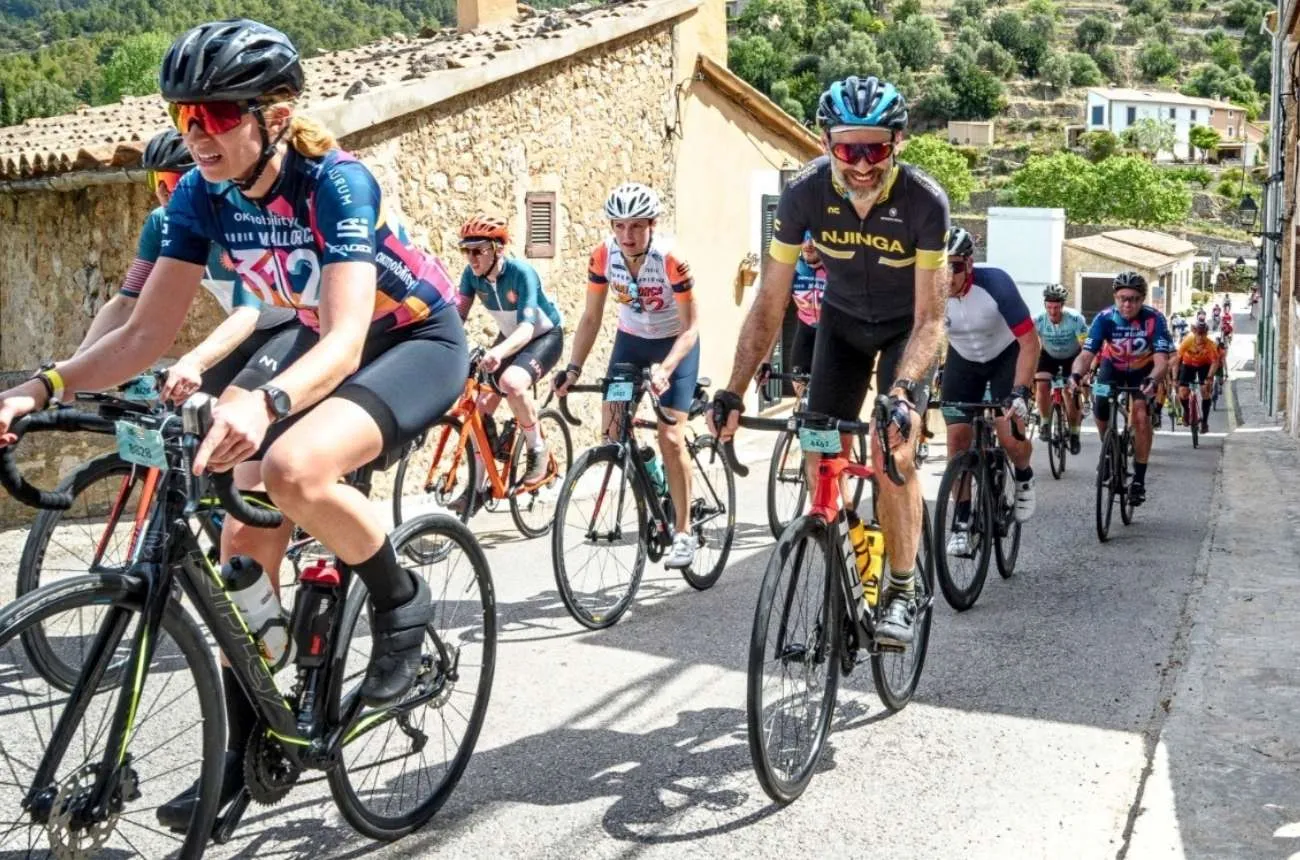
For Mallorca 312 for example the elevation profile is deceptively complex in the middle section. Study it the evening before, identify the two or three climbs that will decide your day, and have a pacing intention for each one before you roll out.
For Alpine sportives: the descents matter as much as the ascents. Know where the technical sections are and where you can recover safely. Arriving at a fast descent without knowing what's at the bottom costs energy and confidence that the climbs will demand later.
Practical steps: download the GPX file to your head unit the evening before. Use Komoot or Strava to walk through the route virtually if you haven't ridden it before. If the event provides a roadbook, read it. A quick tip I use- tape a small piece of card to your bike stem with the key markers, major climb at kilometre 45, feed station at 78, final climb at 95, takes two minutes to prepare and removes the extra pressure of navigating while cycling hard.
You don't need to have ridden every metre of the route to feel prepared. You need to know where the day gets serious and have a plan for those moments before they arrive.
5. Sort the Kit Tonight, Not Tomorrow Morning
Event morning logistics done under time pressure create stress that can affect your ride. If you are rushing to find your helmet at 6am you are already behind, not physically, but psychologically. The first hour of a big event is when pacing discipline matters most, and a stressed, rushed start makes conservative pacing harder to execute.
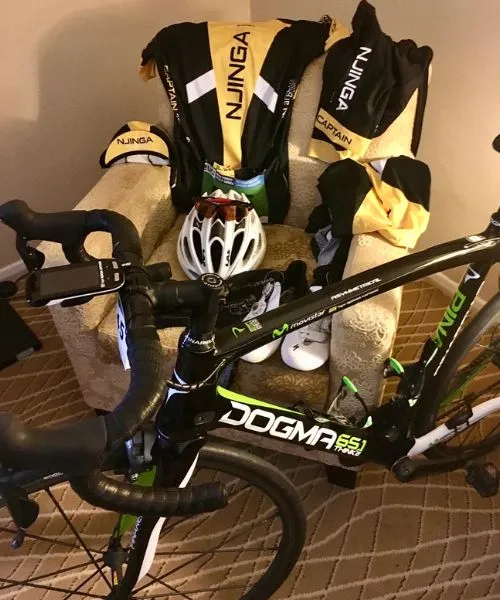
The evening before the event, lay everything out. Kit, shoes, helmet, glasses, gloves, nutrition, tools, tubes, pump, phone, wallet, number if required. Fill the bottles. Charge your head unit and the lights. Check tyre pressure. Set the alarm with enough time to eat, dress, and travel without rushing.
For riders travelling to events like Mallorca 312 or Alpine sportives: do this the evening you arrive, not the night before the event. Jet lag, unfamiliar kit bags, and the distraction of a new environment make last-minute preparation more error-prone than it is at home.
This is a small thing that produces a big return in how the morning feels. Calm mornings produce better early pacing. Better early pacing produces stronger final hours.
6. The Start Line Is Not a Comparison Point
For cyclists over 40 heading into a significant event, the start line can be a psychologically charged place. Other cyclists look lean, prepared, and fast. The comparison that happens in the pen, conscious or not, is one of the most reliable ways to start a ride at the wrong pace. I’ve made this mistake myself more than once.
Two things worth remembering.
Everyone around you is managing the same pre-event anxiety. The cyclist who looks completely relaxed is managing it differently, not feeling it less. The cyclist who looks faster than you might be and might not be. Neither is relevant to how your day goes.
how your event goes is between you and the route. The pace that works for you is determined by your training, your current fitness, and the distance ahead not by the cyclists around you in the first twenty kilometres. The ones who go out too hard from the start are making a decision that will cost them later. Let them.
For Alpine sportives where the first climb arrives early: this matters most. The instinct to match the pace of the group on the initial ascent is one of the most common reasons 40+ cyclists blow up before the halfway point. Start the first climb at a pace that feels almost too easy. The day is long. The legs need to be there at the end of it.
What Actually Matters in the Final 3 Days
The training is done. The fitness is there. The final three days are about delivery, protecting what you've built and giving yourself the best possible chance on the day.
Rest. Sleep. Eat well. Sort the kit. Start conservatively.
That's your entire job between now and the start line.
If this week feels uncertain, or you’ve ever finished an event thinking “I know I could have done that better”, that’s exactly what we fix inside Elevate.
Featured in Cycling Weekly, Rouleur & Cycling Plus