.jpg)
Cycling Training Over 40: What Changes, What Doesn't, and How to Keep Improving
Your body at 40+ can still get faster and stronger. You just need to train smarter, recover better, and stop following advice designed for 25-year-olds.
Training after 40 means you just need to focus on more important aspects, including being smarter with recovery, more intentional with intensity, and building a system that works with your body, not against it. The good news? With the right approach, your strongest, most consistent cycling can still be ahead of you, if you're in your 40s, 50s or even into your 70’s. spects
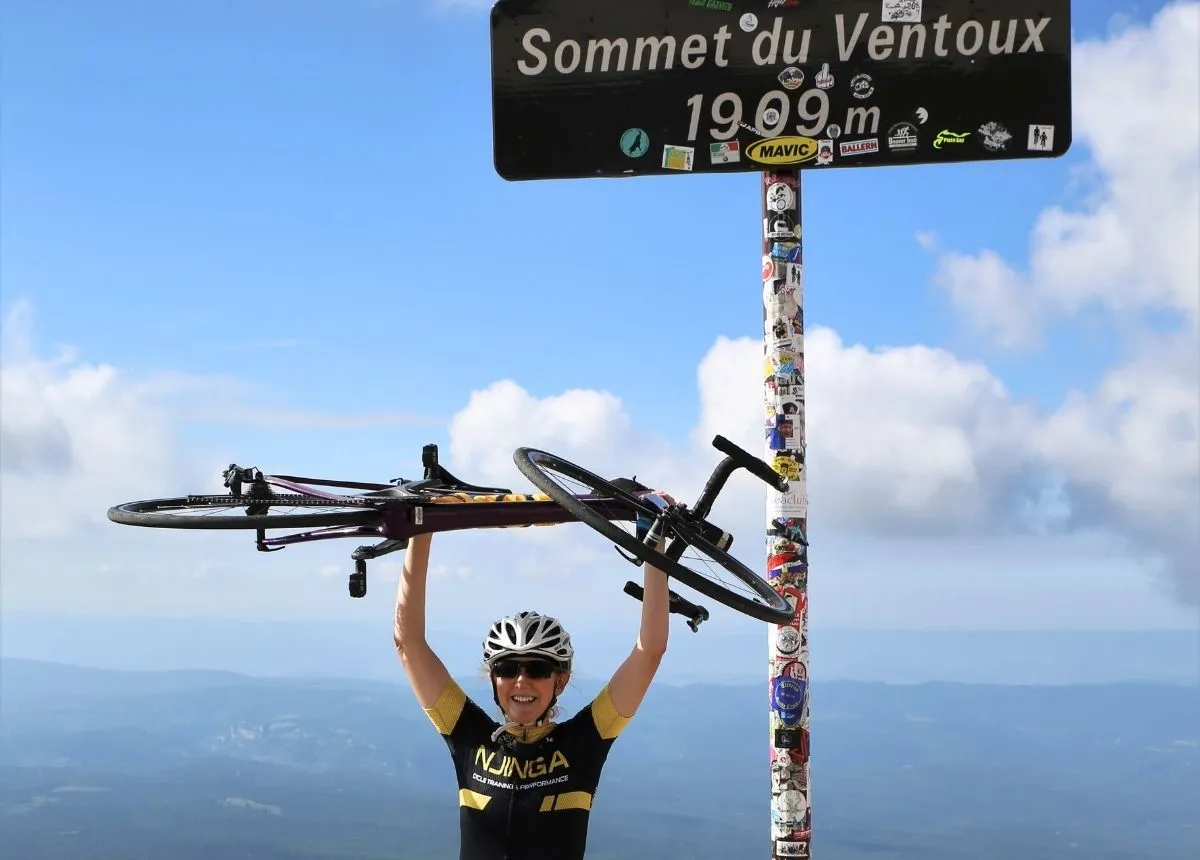
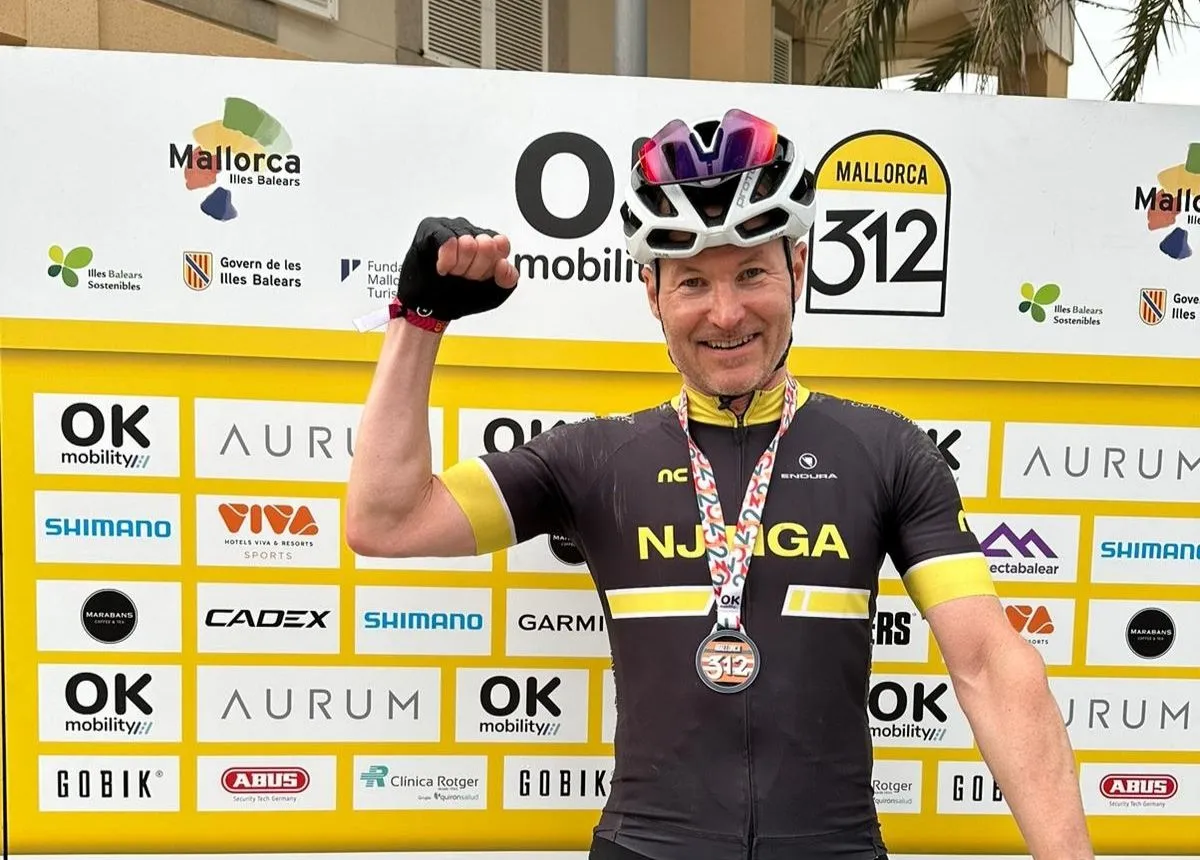
In fact, some of the strongest, most consistent riders we work with didn’t hit their stride until midlife. They’re not genetically better or full-time athletes either. Most are busy professionals who simply learned how to adapt their training more effectively for their current stage of life.
The reality is this: training after 40 does require a shift, because your body responds differently now. The good news? Once you understand what’s changed , and what hasn’t, you can build a training approach that works with your life, your body, and your goals.
Effective cycling coaching for riders over 40 must integrate:
- Training load and recovery capacity
- Performance goals and life stress
- Progression and injury resilience
At Njinga Cycling, this is what we call our 360 Performance CodeTM - Train, Fuel, Mind. It’s our unique holistic coaching system that recognises performance isn’t just about logging hours on the bike. Instead iIt’s about training, recovery, intention, nutrition, and mindset all working together.
Let’s break down exactly what changes after 40, what stays the same, and how to use both to your advantage.
What Actually Changes After 40

1. Recovery Takes Centre Stage
This is the big one and it’s where most riders over 40 get it wrong.
You can still train hard. You can still build fitness but your body needs more time to adapt and repair. What used to take 24 hours might now take 48, sometimes longer if life stress is high. Back-to-back hard sessions that felt manageable at 30 can leave you flat, irritable, and stuck in a cycle of fatigue at 55 and wondering why your numbers wont budge.
What’s happening under the surface:
- Inflammation lingers longer
- Nervous system fatigue accumulates quietly
- Sleep disruption has a bigger impact on adaptation
You may feel “fine,” but still be under-recovered at a cellular level. This is why many riders train consistently yet see nothing improving. Recovery is where fitness happens. Training is just the stimulus.
This is one of the first things we look at in a coaching assessment. If you want to understand how recovery is affecting your training right now, our free 15-minute coach call is the place to start.
What this means for your training:
- Be more intentional with rest days and easy rides
- Sleep becomes non-negotiable, not optional
- Fuel timing and content matter more
- Active recovery (easy spins, mobility) becomes essential
- Stress regulation becomes critically important not optional
2. Your Power-to-Weight Sweet Spot Shifts
Chasing the same power numbers you hit at 25 can become a losing game. Maintaining strong functional power relative to your current body? Absolutely achievable. Muscle mass naturally declines with age if you don’t actively maintain it. Metabolism shifts. Hormones change. That doesn’t mean you can’t be powerful it means the path there looks different.
What this means for your training:
- Strength and resistance work become essential, not optional extras
- Two quality sessions per week beat five mediocre ones
- Fuelling properly around sessions protects muscle and speeds recovery
- Strength training becomes a performance multiplier, improving climbing, sprint resilience, and durability
3. Intensity Still Works, But Volume Needs Intention
One of the biggest myths about training after 40? That you can’t go hard anymore. Absolute rubbish. High-intensity work is still incredibly effective. Short, sharp efforts build fitness, improve VO₂ max, and make you faster. The key word is INTENTION.
Random hard rides or smashing every group ride will leave you cooked. Structured intensity with proper recovery is where the magic happens.
What this means for your training:
- Polarised training (easy really easy, hard properly hard) works brilliantly
- Stop living in the grey zone
- You don’t need volume for volume’s sake
- Quality over quantity becomes your mantra.
4. Injury Prevention Becomes Part of Training
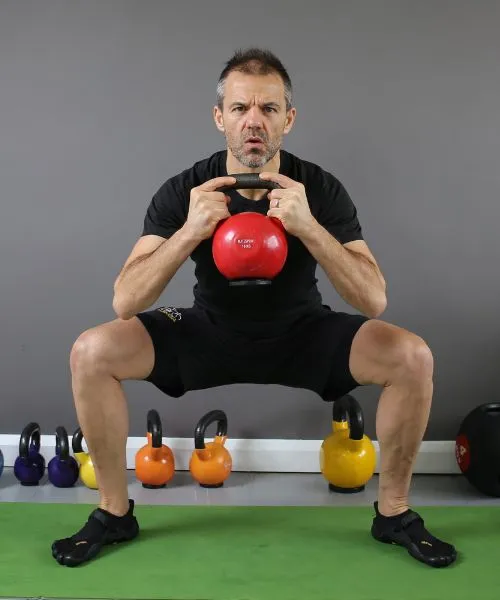
Niggles you could ignore at 30 become injuries at 48 if left unchecked. Tight hips, weak glutes, poor mobility - these compound over time and show up as pain, discomfort, or reduced performance. It’s accumulated tension, desk jobs, and years of repetitive movement without balance.
What changes physiologically:
- Collagen turnover slows
- Tendons stiffen without varied loading
This is why riders often feel strong… and then get injured out of nowhere.
What this means for your training:
- Ten minutes of mobility can save you weeks off the bike
- Strength training protects joints and improves power
- Listening to your body isn’t being soft, it’s being smart
5. Stress NOT Hormones Kills Performance.
Hormonal changes after 40 are gradual. But what really changes is your ability to tolerate cumulative stress.
Work pressure, poor sleep, under-fuelling, these all reduce your bodies ability to adapt (and even lose fat). Busy professionals often struggle by stacking training stress on top of life stress without adjusting recovery, creating a deficit you cant train through.
What this means for your training:
- Your body doesn't separate life stress from training stress, it all counts.
- Stressful week at work? That's the week to nail your recovery, not prove how tough you are.
- Planning matters: schedule hard sessions when life allows proper recovery, not just when your plan says so.
What You Can Still Count On After 40
1. You Can Still Build Fitness
Let’s be crystal clear: your capacity to improve doesn’t disappear at 40. The physiology of adaptation is the same:
stimulus → recovery → adaptation → repeat.
Yes, timelines may be longer. Yes, you need to be smarter. But consistent, progressive training builds fitness at any age. Your aerobic capacity, in particular, ages far better than most people realise.
Physiological reality:
- Mitochondrial density remains highly trainable
- Endurance adaptations persist longer than most qualities
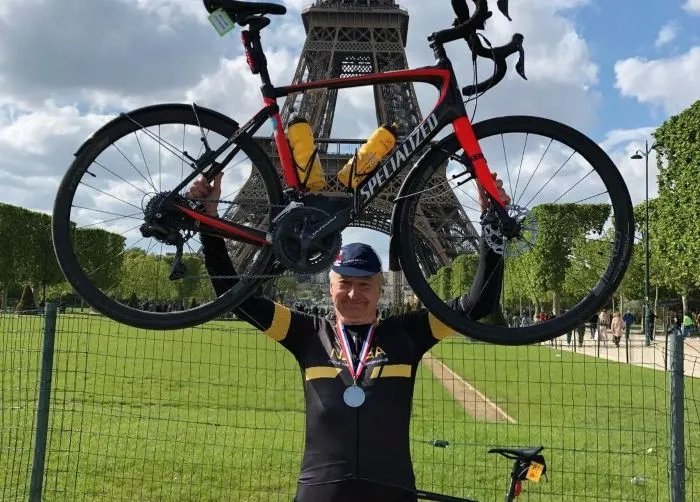
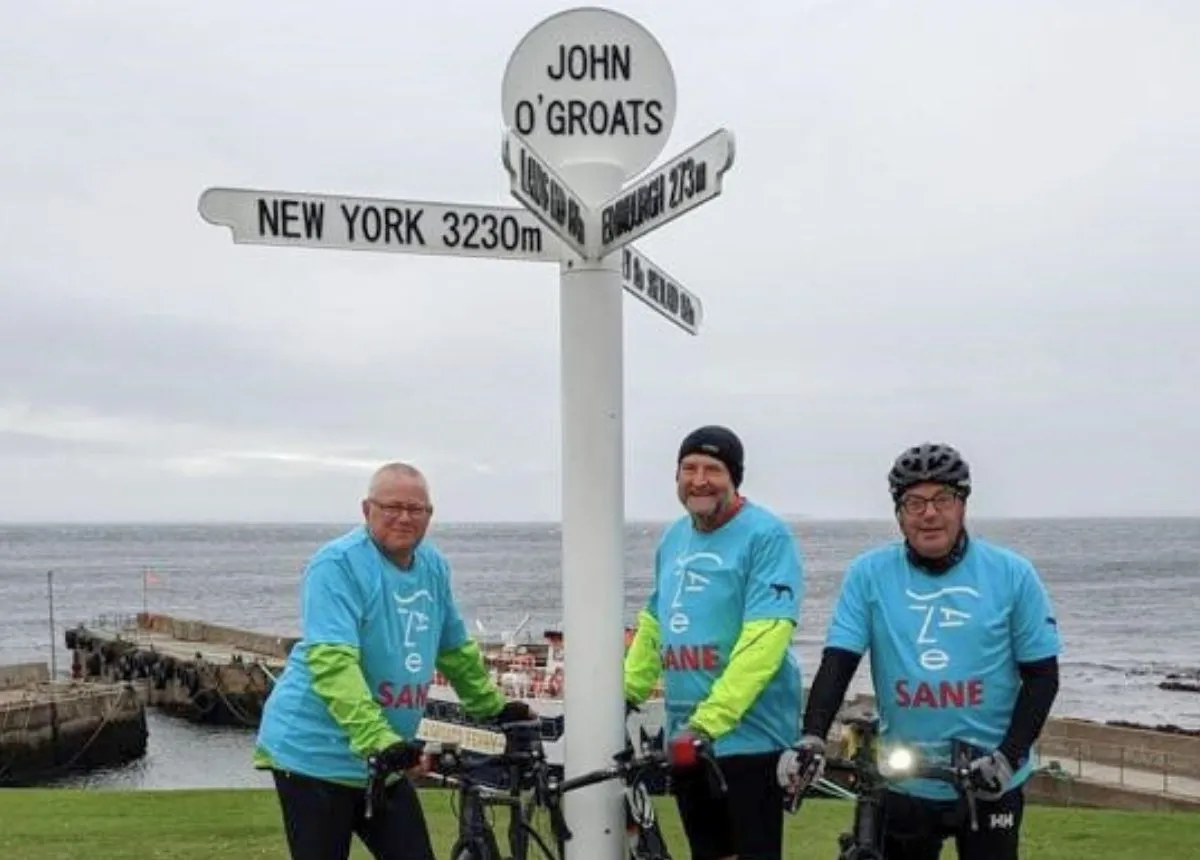
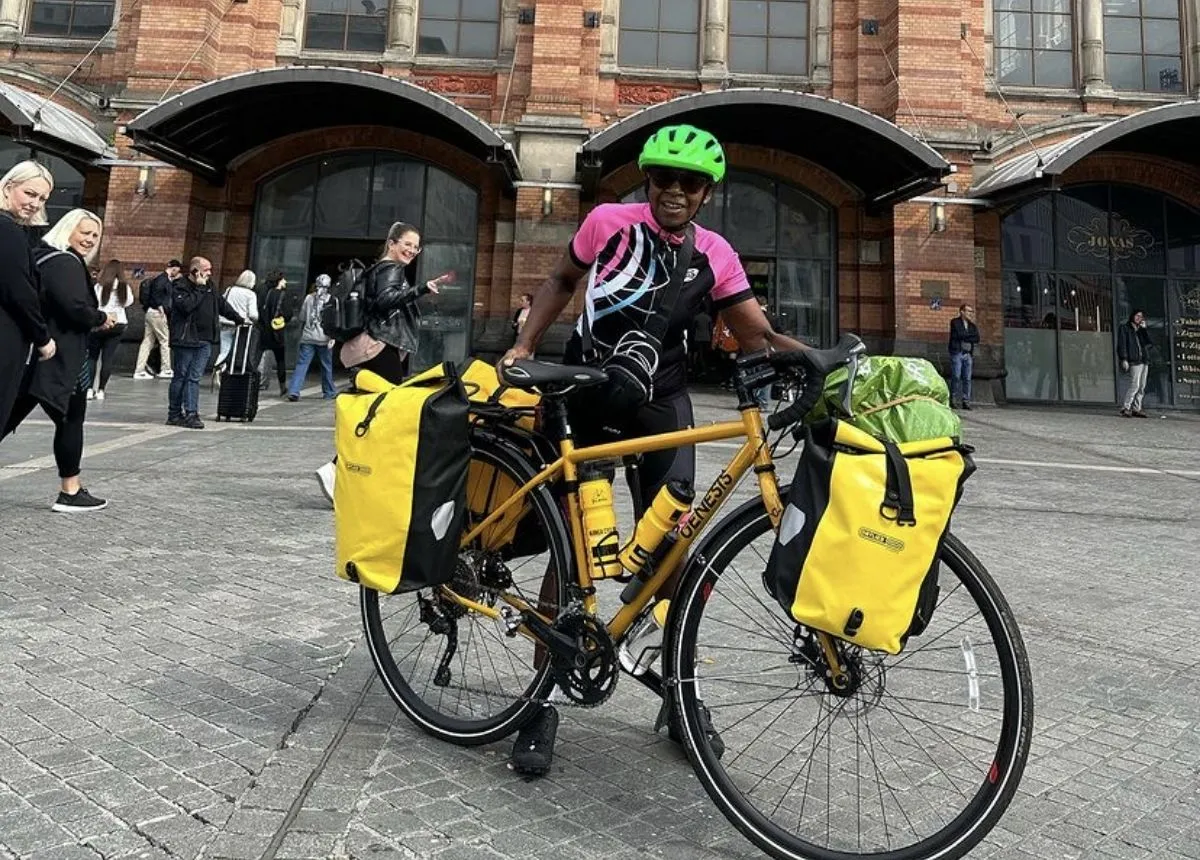
Many cyclists over 40 outperform younger riders simply because they pace, fuel, and recover better. We’ve worked with riders in their 50s and 60s who’ve hit personal bests, completed events they never thought possible, and rediscovered a love for cycling they thought was gone.
2. The Fundamentals Matter More Than Ever
Aerobic base. Consistency. Progressive overload. These pillars don’t change. What does change is your margin for error. At 25, you could get away with poor sleep, average nutrition, and random training. After 40, those details matter. A lot.
The upside? When you nail the fundamentals - Train, Fuel, Mind - results often come faster because you’re working with your body, not against it.
3. Speak Smarter to Yourself
The way you speak to yourself matters more than you think.
Even joking comments like “I’m always the slow coach” or “I’m useless on climbs” reinforce an identity your body starts to believe. Your nervous system doesn’t distinguish between humour and habit. Repeated language becomes internal expectation.
Words shape perception. Perception shapes behaviour which shapes performance. If you constantly tell yourself you’re the slow one, you’ll ride cautiously, hold back, and unconsciously confirm the story. Change the language and you change the outcome.
Instead of:
“I’m terrible at climbing.”
Try:
“Climbing is something I’m improving.”
“I’m learning how to pace this better.”
“I’m building strength here.”
This isn’t blind positivity. It’s intelligent self-leadership.
After 40, confidence and clarity become performance multipliers. Speak to yourself like someone who expects to improve and your riding will begin to reflect it.
4. Motivation and Enjoyment Drive Everything
Here’s what we see time and again: riders over 40 who enjoy their cycling, have clear goals, and feel confident on the bike, stay consistent. And consistency is the single biggest predictor of success. Training that feels like punishment doesn’t last. Training that feels purposeful, enjoyable, and aligned with what you actually want is what is sustainable.

Why This Actually Matters: Training for Enjoyment, Not Just Performance
Every rider we work with tells us they want to enjoy their cycling more.
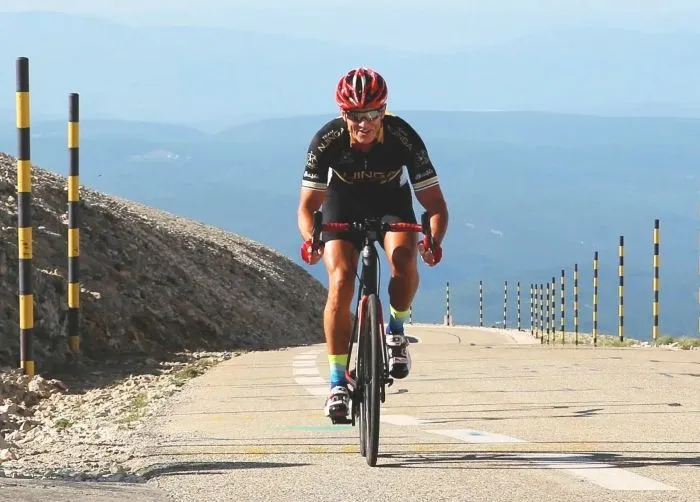
Not just survive rides or tick off miles. Actually enjoy them, feel strong on climbs, confident in groups, alive on the bike. But to enjoy your cycling more, you need to improve your performance. And that requires training smarter, not just harder. The sessions that challenge you a little, that push you just outside your comfort zone, those are the ones that create growth. Not the rides that leave you unable to walk comfortably the next day or the efforts that bury you for a week. The ones that stretch you just enough to adapt, recover, and come back stronger.
True growth, both physical and mental, happens at the edge of your comfort zonen not miles beyond it.
This is what smart progression looks like: challenging yourself on and off the bike in ways that make you stronger and keep you loving the process. Because when you stay in your comfort zone or train without intention, that's when plateaus happens,motivation fades and your love for cycling starts to disappear.
Why does this matter so much after 40?
For most midlife riders, cycling is about two things: stress relief and challenge. The pure enjoyment of being on the bike, clearing your head, feeling alive. And the satisfaction of overcoming something difficult, getting to the top of that climb, finishing that gran fondo, completing that ride you've been thinking about for months.
Both matter. Both fuel the joy.
The riders who enjoy their cycling most aren't the ones avoiding challenge. They're the ones who've found the balance: training smart enough to feel strong when it counts, without suffering unnecessarily along the way.
Because finishing a big ride with a smile on your face, sharing that moment with mates or a loved one, feeling capable and confident, that's what it's all about. Not grinding through something you're dreading or suffering for the sake of it.
You don't want to just survive the big rides, you want to enjoy them.
And that requires getting stronger. Intentionally. Progressively. Sustainably.
The 360 Performance CodeTM: Train, Fuel, Mind
At Njinga, we don’t just hand you a plan and wish you luck. We coach the full picture, because performance after 40 demands it.
Train: Structure That Fits Your Life
Your training must fit around your job, family, and reality, not the other way round. That means being strategic about intensity, recovery, and progression without burnout. Our personalised Elevate coaching programme is built on this principle: 1:1 bespoke focus, adaptive training that meets you where you are and gets you where you want to go.
Fuel: Nutrition That Supports Performance
You can’t out-train poor nutrition, especially after 40. So we focus on simple, sustainable habits that support training and life.
Mind: Confidence, Clarity, Enjoyment
Training after 40 is as much mental as physical. Do you believe you can improve? Do you enjoy the process? Do you have clarity on what you're working toward? When riders tell us they feel more confident, more motivated, and genuinely excited about their cycling, that's when we know the system is working.
What’s Holding You Back?
If you’re thinking, “This all makes sense, but I’m not sure where I’m going wrong,” you’re not alone. Most riders over 40 are following advice designed for younger athletes or generic plans that don’t match their reality.
That’s why we created the What’s Holding You Back? Quiz. In just a few minutes, it shows whether training structure, recovery, nutrition, or mindset is limiting your progress.
Once you know what’s in the way, you can fix it.
What’s Possible When You Get It Right
Training after 40 is about working intelligently with the body you have today, not the one you had 20 years ago. When you build around Train, Fuel, Mind, here’s what becomes possible:
- Riding stronger and more consistently than you have in years
- Feeling confident on climbs, in groups, and at events
- Enjoying cycling instead of just enduring it
- Achieving goals you’d written off as “too late”
We’ve seen it happen dozens of times, you just need to make every ride and every recovery day count.
Ready to Put This Into Practice?
Njinga's coaching programmes are built specifically for cyclists in their 40s, 50s and beyond. Structured, time-efficient, and designed around how your body actually works at this stage of life.
See how we coach riders over 40 →
If you're serious about improving your performance, confidence, and enjoyment on the bike, our Elevate 1-on-1 coaching programme is designed for exactly that. This is not a cookie-cutter solution or one-size-fits-all advice. We build personalised coaching around your goals, your schedule, and your life. Train, Fuel, Mind. All working together.
Not sure if coaching is right for you?
Start with our insightful cycling quiz for over 40’s- What's Holding You Back. It'll give you clarity on what's keeping you from the cycling you want, and whether Elevate could help you get there.
Training after 40 is about being smarter with recovery, more intentional with intensity, and building a system that works with your body, not against it. The good news? With the right approach, your strongest, most consistent cycling can still be ahead of you.
Featured in Cycling Weekly, Rouleur & Cycling Plus